


Description
Tinos – grey-turquoise mosaic: character and look
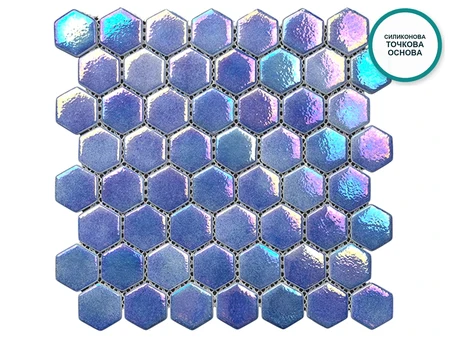
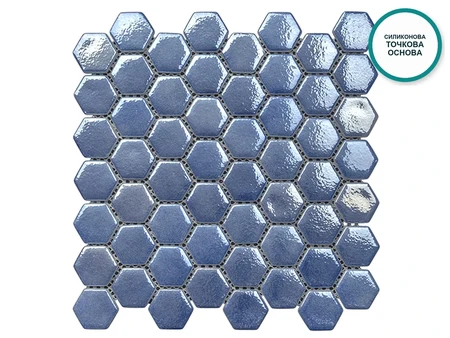
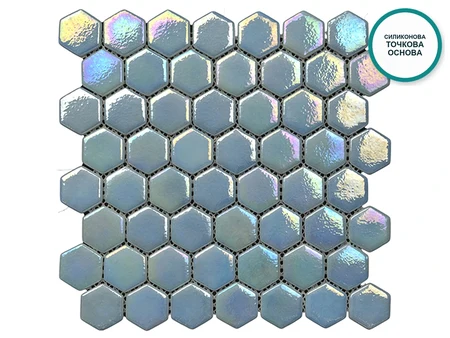
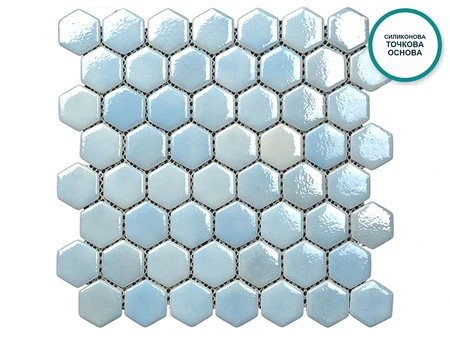
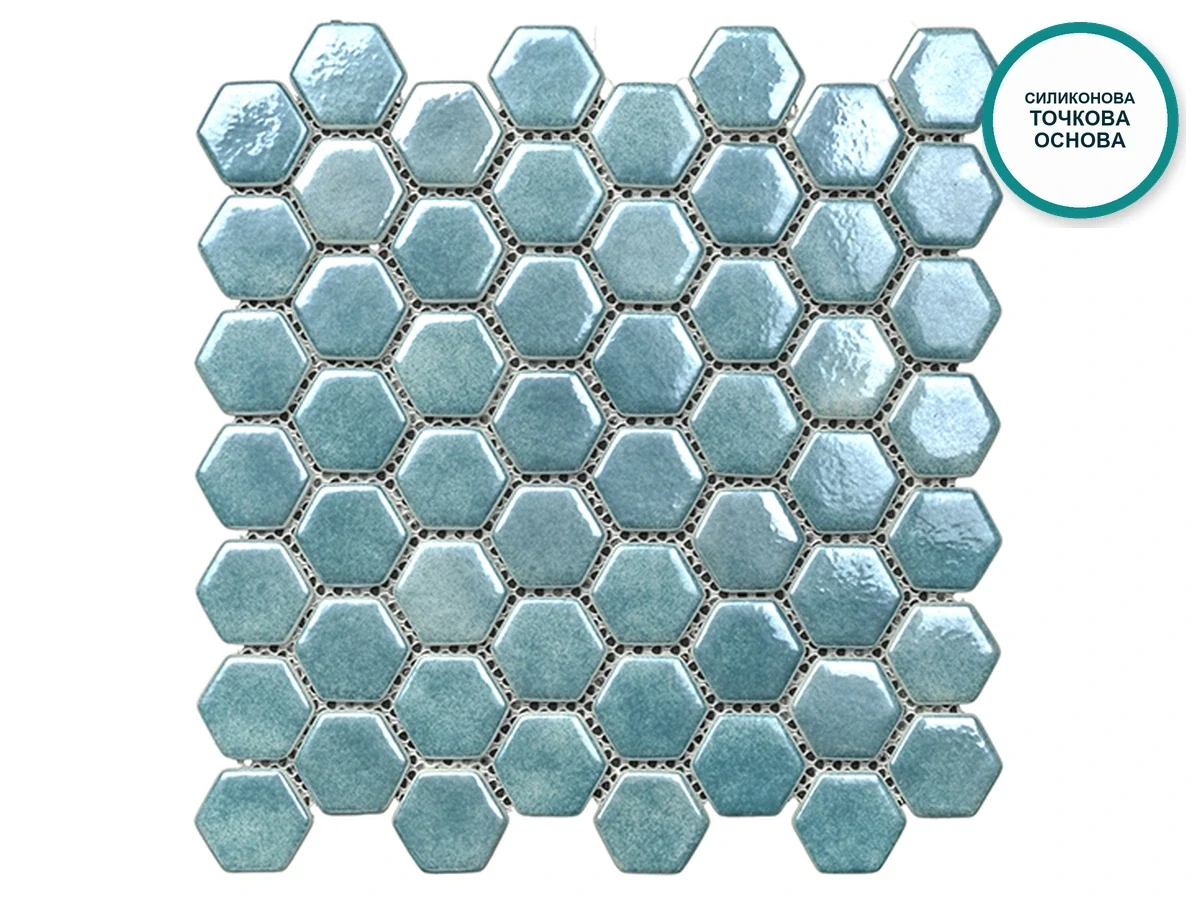
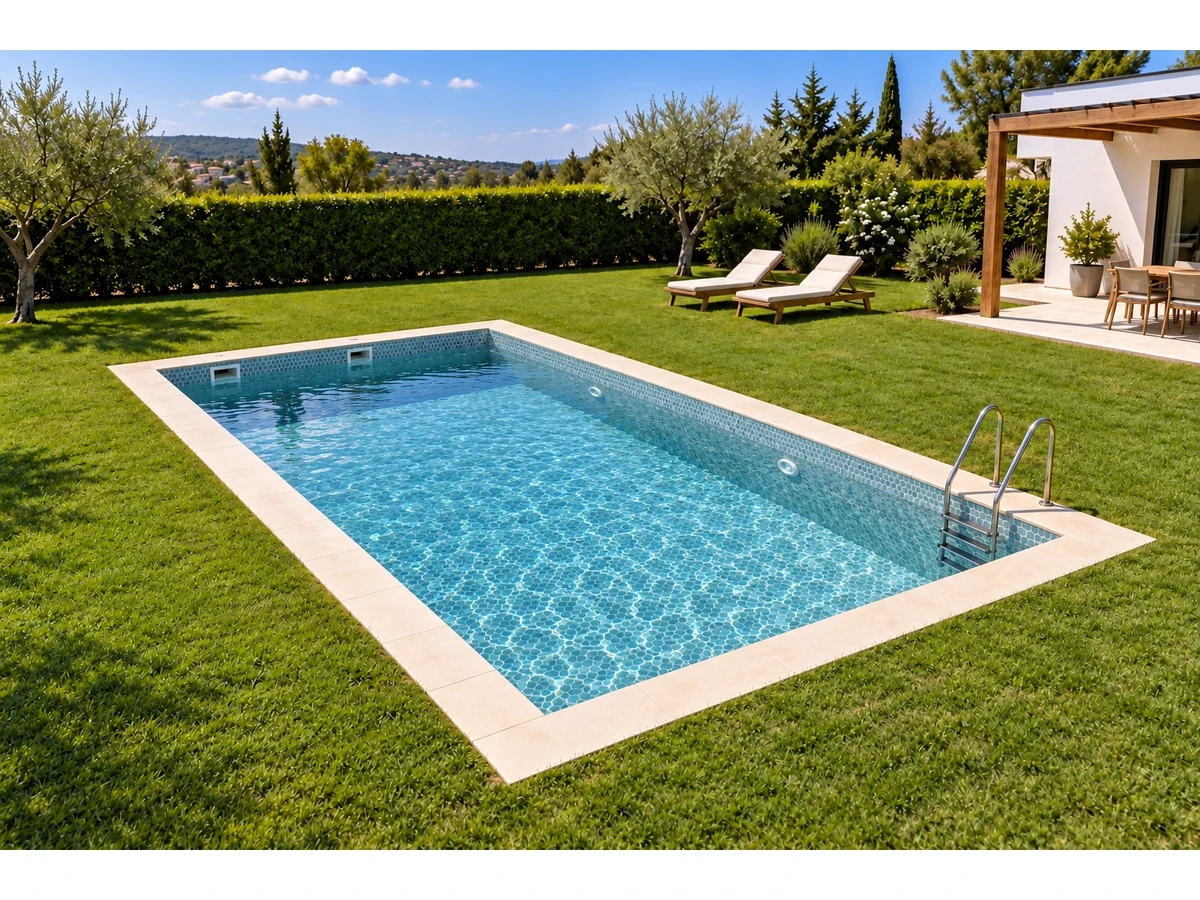
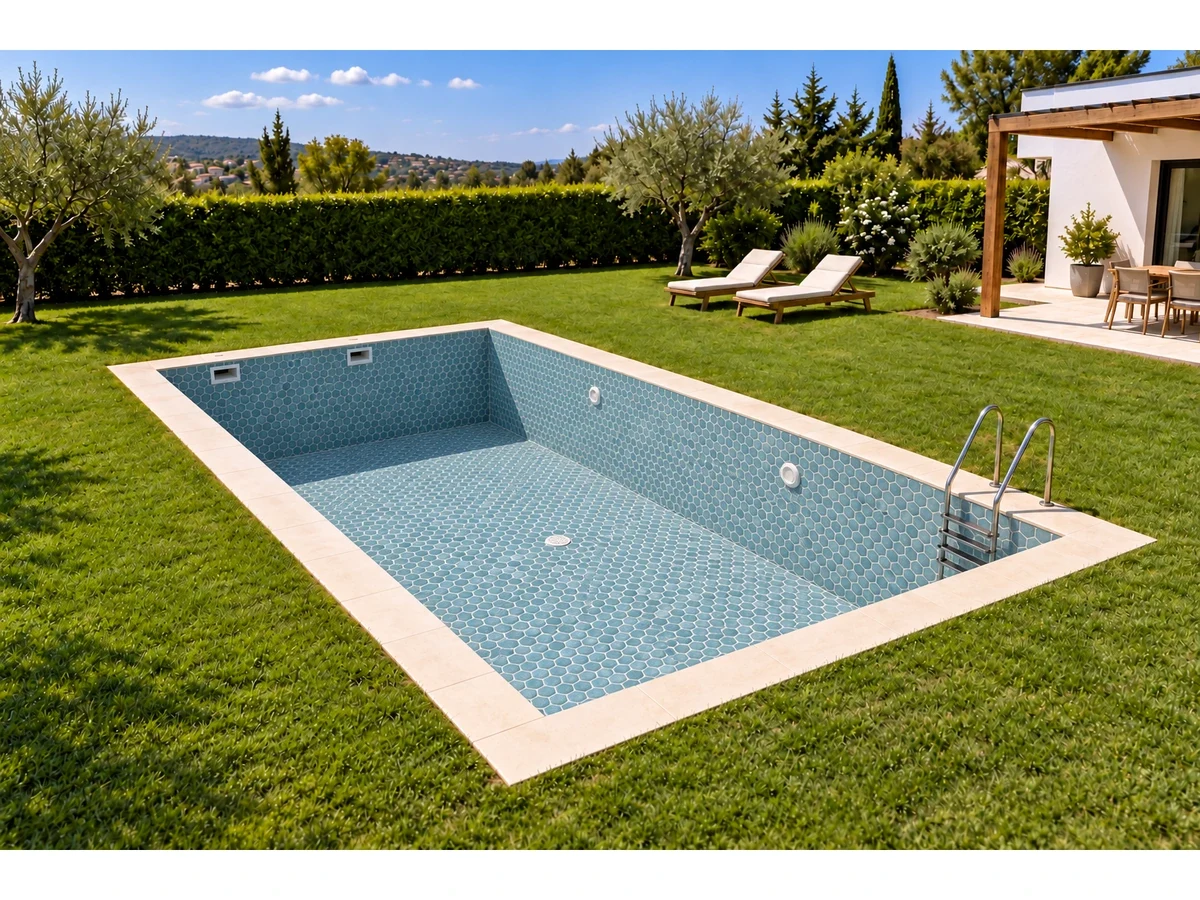
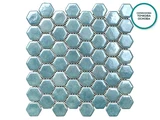
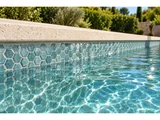
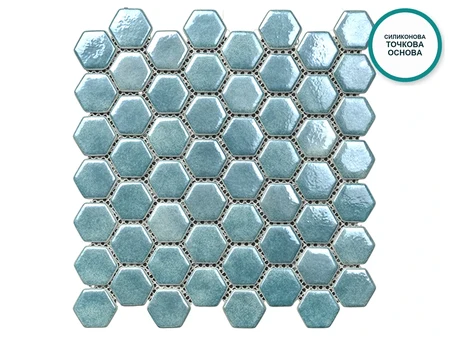
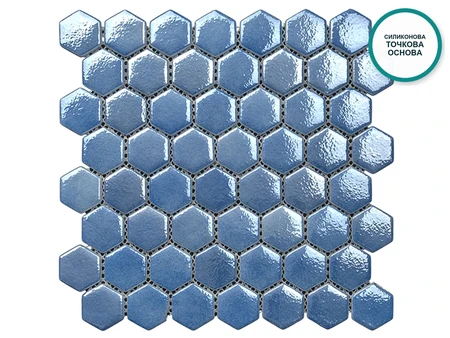
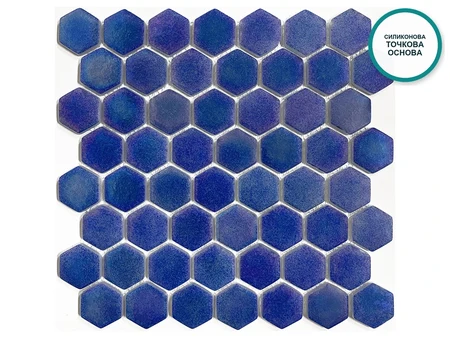
Tinos is a glass-ceramic mosaic of hexagonal chips in a grey-turquoise range. The sheets have a hazy, greenish sheen, and pieces close in tone form a calm, uniform surface.
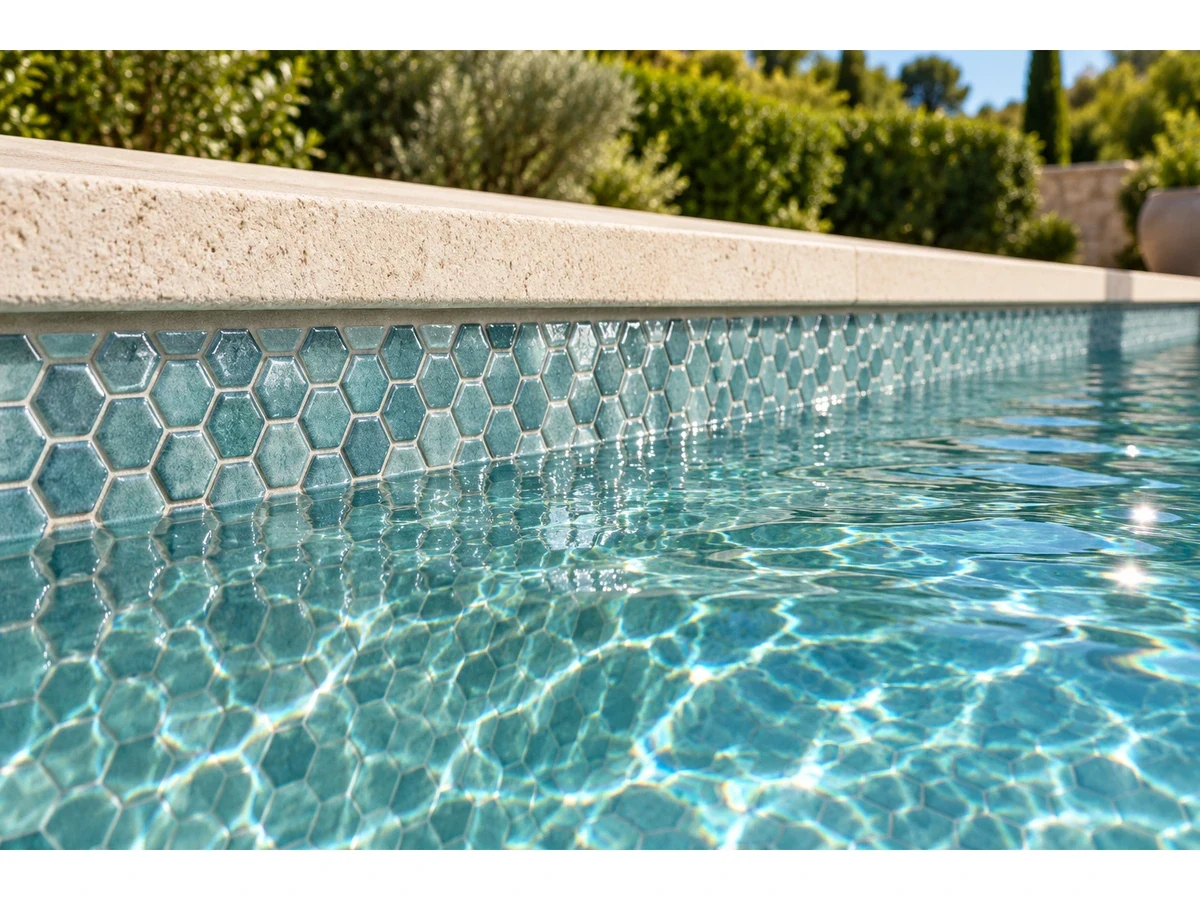
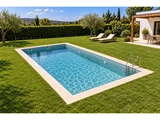
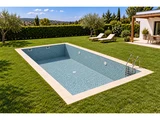
The colour recalls water in a rocky cove. In sunlight under water the turquoise turns fresher and livelier, which is why the mosaic works best in natural-style pools and stone cladding.
The surface is non-porous glass that absorbs neither stains nor odours. The colour stays stable over time, and 13 sheets cover one square metre.
What you get with Tinos
- Dense surface: the glass absorbs no more than 0.04% water, so there is no room for mould, stains or unpleasant odours.
- Made for use underwater: you can keep it permanently submerged – in a pool, hot tub, fountain or overflow channel.
- Colour that lasts: neither sunlight (ISO 4892) nor pool chemicals (class A under ASTM C650) will fade it.
- Winter durability: after repeated freeze–thaw cycles (ASTM C1026) the mosaic remains unchanged, which makes it suitable for outdoor use too.
- Strength: 55 N/mm² flexural strength (EN ISO 10545-4) and a smooth, flawless face.
- Environmentally friendly: all the glass is recycled, and the colouring contains no lead, cadmium or other heavy metals.
Technical specifications
| Model | Tinos |
|---|---|
| Article no. | MOSFBZH210 |
| Material | glass-ceramic, made entirely from recycled glass |
| Colour range | grey-turquoise |
| Surface | gloss |
| Shape of the pieces | hexagon |
| Chip thickness | 5.5 mm |
| Sheet | 300 × 290 mm |
| Sheets per 1 m² | 13 |
| Sheet backing | silicone (polyurethane) dots |
| Recommended grout joint | 2 mm |
| Packaging | 1 m² carton |
| Immersion in water | permanent – suitable |
| Frost | resistant, ASTM C1026 |
| Chemicals | class A, ASTM C650 |
| Flexural strength | 55 N/mm² |
| Water absorption | up to 0.04% according to EN ISO 10545-3 |
| Where it is used | pools, hot tubs, spa areas, bathrooms and showers |
How the sheet backing is made
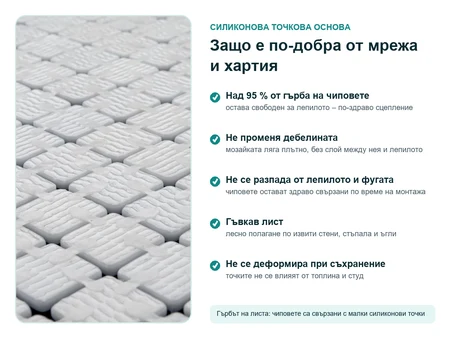
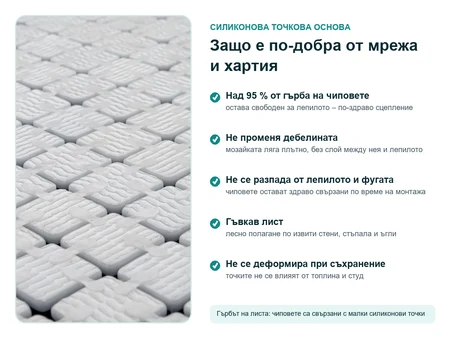
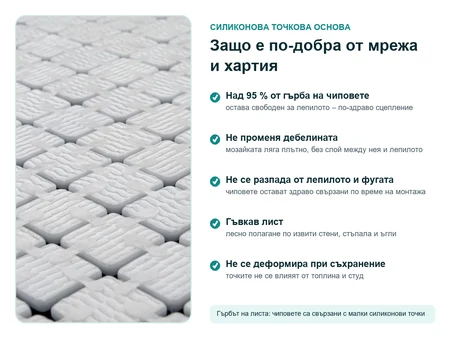
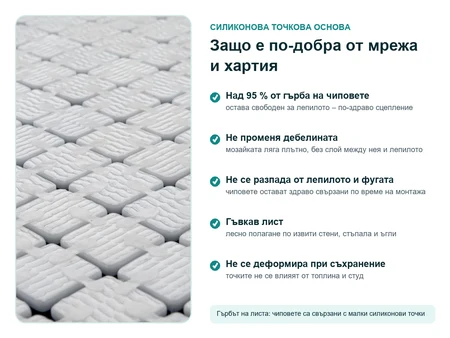
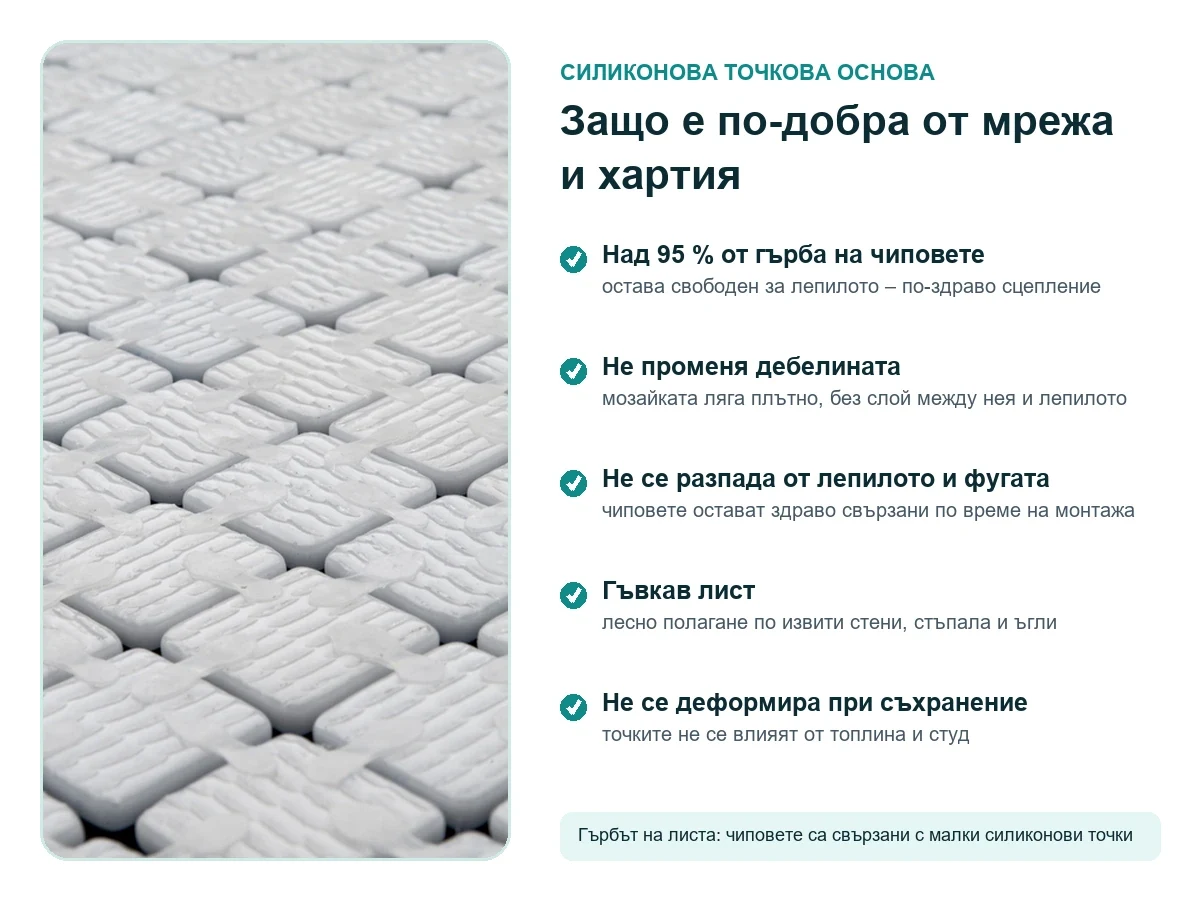
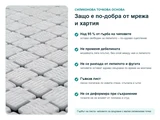
Small silicone (polyurethane) dots hold the chips together and leave their backs almost fully exposed – more than 95% of each chip comes into direct contact with the adhesive. The result is a firm bond. The dots do not add thickness to the mosaic, they withstand the adhesive and the grout, and they do not warp while the sheets sit in the warehouse.
The flexible sheet easily follows rounded walls, steps and corners. Compared with mesh and paper, the dots offer several advantages:
- the adhesive reaches a larger part of the back of each chip, whereas mesh covers part of it;
- the chips and joints stay visible during installation, while under paper the layout is done almost “blind”;
- on curves paper tears, and it then has to be soaked and peeled off – the dots require nothing of the kind.
Where to use it
- interior lining of pools and hot tubs;
- wall accents in bathrooms and spa centres;
- kitchen backsplashes, decorative niches and columns;
- best suited to natural-style pools and stone cladding.
Grout colour
A grey grout keeps the muted, calm look, while a white one freshens up the turquoise. In a pool, use an epoxy grout: it is watertight, does not react to chlorine and keeps its colour.
Installation steps
- Substrate. It must be sound, dry and dust-free, with a deviation from flatness of no more than 2 mm over 2 m. In a pool, an elastic cementitious waterproofing is applied first.
- Choosing the adhesive. Take a white elastic cement-based adhesive C2TE S1 – glass lets some light through, and a dark adhesive would dull the colour.
- Spreading. With the notched trowel (3–4 mm), cover an area for 2–3 sheets.
- Laying. Press the sheet into the adhesive and tap it down with the rubber float; keep the same 2 mm joint between the sheets.
- Cutting. Around corners and nozzles, cut the dots with a utility knife and trim individual chips with glass mosaic nippers.
- Grouting. Start after one day. A wet sponge removes residue before it dries; epoxy grouts are cleaned off immediately with a special cleaner.
- Filling with water. Fill the pool once the grout has fully cured – usually after a week.
How much adhesive and grout to plan for
The figures are approximate. For adhesive, allow about 2 kg per m² for chips up to 25 mm, 2.5 kg for 40 mm and 3 kg for larger ones. For the grout, use (A + B) / (A × B) × C × D × 1.6 kg/m², where the calculations here are for a chip of about 3 cm, a thickness of 5.5 mm and a 2 mm joint. In reality the quantities depend on how flat and how absorbent the substrate is, on the chosen adhesive and grout, on the trowel teeth, on the shape of the project and on the installer’s experience – compare them with the technical data sheets and with your contractor.
Materials you will need
Besides the mosaic, prepare an elastic waterproofing for the pool, white adhesive C2TE S1, an epoxy or other waterproof grout, a notched (3–4 mm) trowel and a rubber float, a utility knife, special nippers for cutting glass chips, a sponge, a bucket and clean water.
What the tests show
The glass-ceramic has been tested by international methods: flexural strength is 55 N/mm² (EN ISO 10545-4), and the surface is 100% free of defects (EN ISO 10545-2). Against chemicals the material is class A with no visible change (ASTM C650), it remains unchanged after freezing and thawing (ASTM C1026), and under UV light it does not change colour (ISO 4892). Water absorption is at most 0.04% (EN ISO 10545-3), and the thermal expansion is also within the norm (EN ISO 10545).
Maintenance
- For daily cleaning, a soft cloth or a sponge with a neutral cleaning product is enough.
- Do not use abrasive powders, wire brushes or acidic cleaners on the grout.
- Keep the pH between 7.0 and 7.4 and the water hardness normal – this prevents limescale from forming on the grout.
- Clean the waterline regularly with a sponge and a suitable cleaner.
Questions and answers
Which adhesive is suitable for Tinos?
The white elastic cement-based adhesive C2TE S1 – it does not affect the shade of the glass.
Which grout is best?
For a pool – epoxy. As for colour: a grey grout keeps the muted, calm look, while a white one freshens up the turquoise.
Is it sold in quantities smaller than a carton?
No, the pack is a 1 m² carton. Buy the whole quantity at once and add 5–10% for waste – that way all the cartons come from the same production batch and the shade matches.
Does it tolerate sea salt and chlorine?
Yes. Glass does not react with salt or chlorine and does not lose its colour.
Can it go over existing tiling?
It is possible when the old tiling is firmly attached, clean and free of grease, and has been treated with a suitable primer. For a pool, we advise you to apply waterproofing again.
The colour on site and the colour in the photo
Glass mosaic is perceived differently depending on the conditions. The screen, the lighting, the viewing angle, the depth and clarity of the water, the colour of the grout and adhesive, the surrounding colours and the production batch all have an influence. There is also a natural variation between individual chips. The visualisations are illustrative and serve as a guide only.
See also: Wellness, Pools and Equipment, Cladding and Paving, Pools, Pool Chemicals, Pool Accessories.